Ketamine-Assisted Psychotherapy (KAP)

I provide Ketamine-Assisted Psychotherapy (KAP), a safe and legally available psychedelic therapy option for clients throughout Ohio.

My approach to Ketamine-Assisted Psychotherapy (KAP) is grounded in safety, intention, and deep inner work.

I do not view ketamine as a quick fix or a stand-alone intervention. Rather, it is a powerful therapeutic catalyst that helps quiet the inner critic, soften defenses, and create access to emotions, memories, and parts of the self that may feel blocked in traditional talk therapy.

Preparation is essential in my work. Before any dosing session, we spend time clarifying your intentions, building internal resources, and creating a sense of stability and trust. During the ketamine experience, I hold steady, attuned space—allowing the process to unfold organically while offering gentle guidance when needed.

The medicine often opens a window of expanded awareness; therapy gives that experience meaning and direction.

Integration is where lasting change happens. After each session, we carefully explore the insights, emotions, and imagery that emerged, helping you translate them into practical shifts in your relationships, self-concept, and daily life.

My approach blends trauma-informed care, parts work, nervous system regulation, and depth psychology so that breakthroughs are not just profound—but sustainable. KAP in my practice is about reconnection: to your inner knowing, your body, your truth, and your future. It is not about escaping your life, but about meeting it with greater clarity, compassion, and agency.

The Process

Ketamine-Assisted Psychotherapy begins with a virtual evaluation through Journey Clinical’s medical team, who review your medical and psychiatric history, provide education, and determine whether you’re an appropriate candidate for treatment. If approved, they create a personalized prescription and monitoring plan, prescribe sublingual ketamine lozenges, and ship a small supply to your home for your first sessions. You’ll receive guidance on how to take your vitals and safely self-administer the medication prior to beginning our work together.

Once medication is received, we begin preparation sessions to clarify intentions and ensure you feel grounded and supported. Dosing sessions (1–2 hours) take place either in my office or via telehealth, where you’ll recline comfortably with an eye mask and music while I remain present throughout the experience. Afterward, we engage in integration sessions to process insights and apply them to your life. Journey Clinical continues to provide medical follow-ups and prescription management as part of your ongoing treatment plan.

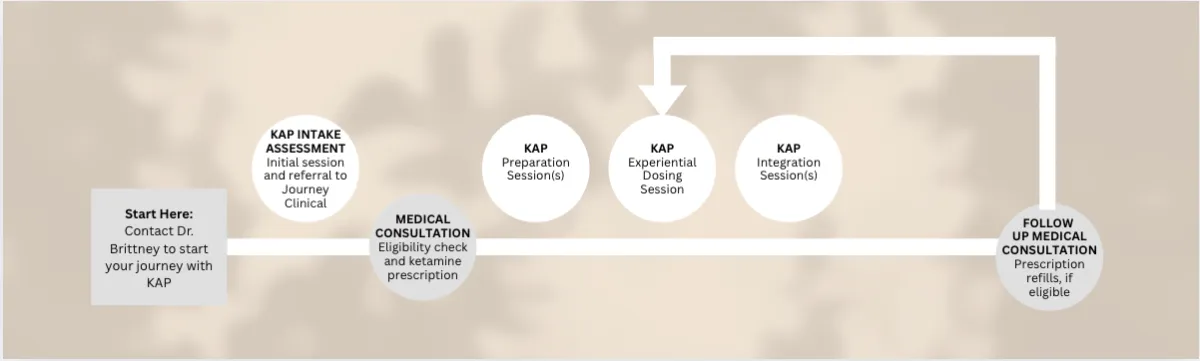
1. KAP Intake Assessment

This initial consultation offers dedicated time to review the KAP informed consent in detail, discuss potential benefits and risks, and answer any questions about the process. It also provides an opportunity to explore your current symptoms, treatment history, and goals to determine whether Ketamine-Assisted Psychotherapy aligns with your clinical needs and readiness.

If KAP appears to be an appropriate fit, a referral will be submitted to Journey Clinical to initiate the required medical evaluation and screening process, ensuring that all medical considerations are carefully assessed before treatment begins.

2. Medical Consultation

An initial virtual evaluation is scheduled with a clinician from the Journey Clinical medical team. During this appointment, your medical and psychiatric history is reviewed, education about the treatment is provided, and eligibility for KAP is determined.

If approved, the medical team develops a personalized prescription and outcome monitoring plan. A limited supply of sublingual ketamine lozenges—typically enough for the first two KAP sessions—is mailed to your home. You will also receive instruction on monitoring your vitals and safely self-administering the medication prior to beginning dosing sessions.

3. KAP Preparation Session

After receiving the ketamine lozenges, preparation, dosing, and integration sessions will be scheduled. Preparation sessions are structured similarly to standard therapy appointments and take place prior to the experiential dosing session.

These meetings focus on clarifying intentions, reviewing the process, and collaboratively establishing goals to ensure you feel informed, grounded, and aligned before beginning the KAP experience.

4. KAP Experiential Dosing Session

A typical ketamine dosing session lasts approximately 2–3 hours and takes place in the office or in your own home with a chaperone.

During the session, the ketamine lozenge is self-administered in a comfortable, supportive setting. You will rest in a reclining position, wearing an eye mask and listening to a curated instrumental playlist. While the experience is primarily inward and reflective, therapeutic support is provided throughout to ensure safety, grounding, and attuned presence as needed.

5. KAP Integration Sessions

Following the KAP dosing session, a series of integration therapy sessions will be scheduled to thoughtfully process the experience. These sessions provide space to explore the memories, emotions, imagery, and insights that emerged, helping translate them into meaningful and lasting change. Integration focuses on weaving new awareness into daily life—shifting patterns, strengthening internal resources, and supporting behavioral or relational changes aligned with your goals.

This phase also allows time to assess progress, refine intentions, and prepare both practically and psychologically for any upcoming dosing sessions, ensuring the work remains intentional, grounded, and therapeutically supported.

6. Follow-up Medical Consultation

After the initial KAP session, Journey Clinical’s medical team will coordinate ongoing follow-up appointments to monitor your response to treatment, assess symptom changes, and ensure continued medical safety. These check-ins also provide an opportunity to adjust dosage if needed and authorize prescription refills for additional ketamine lozenges when clinically appropriate.

The timing of follow-up visits is based on your individualized treatment plan, with appointments occurring at least quarterly, and more frequently if indicated to support optimal outcomes and continuity of care.

KAP Psychotherapy Fees

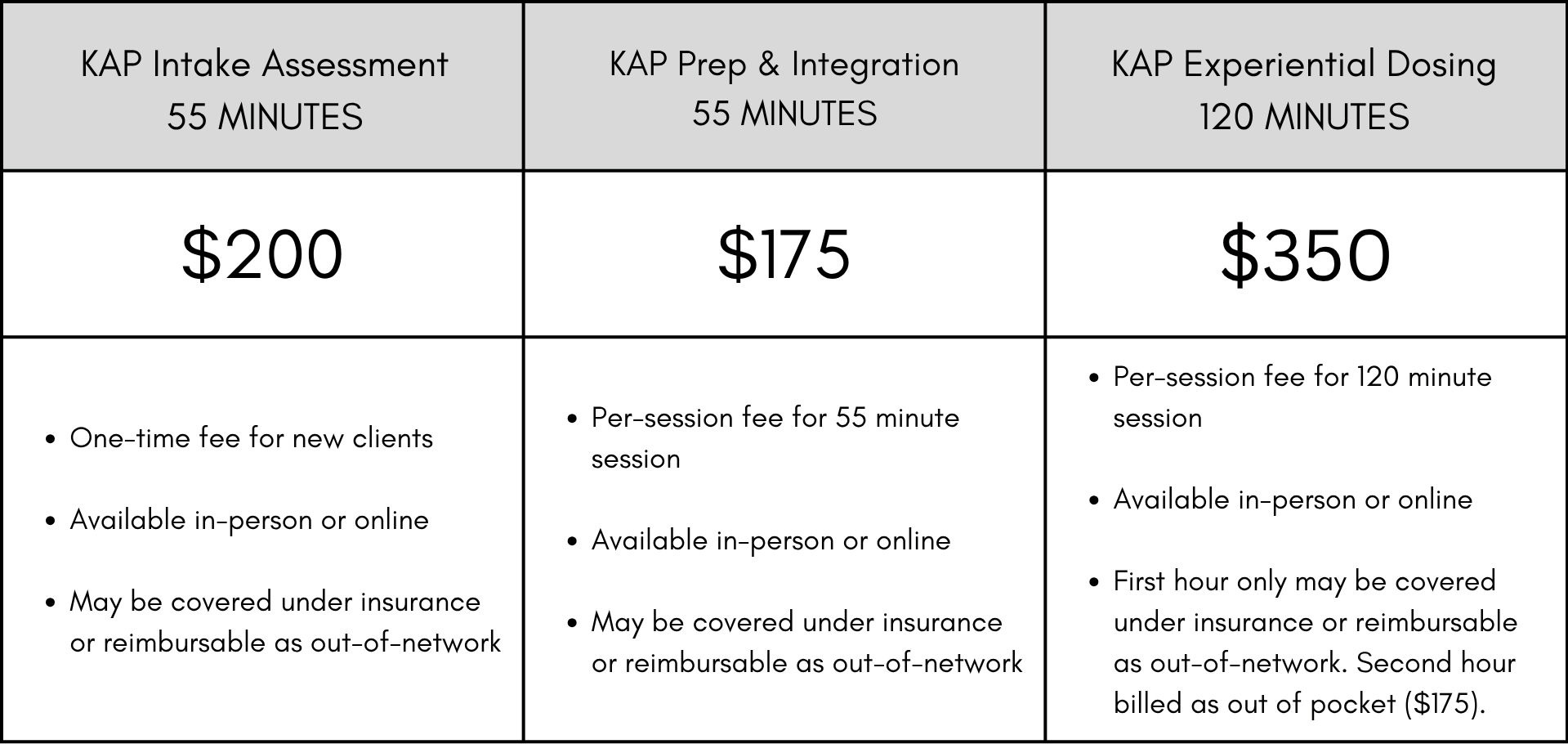
Below are the psychotherapy fees associated with Ketamine-Assisted Psychotherapy (KAP). These rates are consistent with standard individual and couples therapy sessions. New clients begin with a 60-minute intake assessment to establish care. Preparation and integration sessions are 50 minutes in length, while experiential dosing sessions typically last approximately 2–3 hours.
KAP Medical Fees

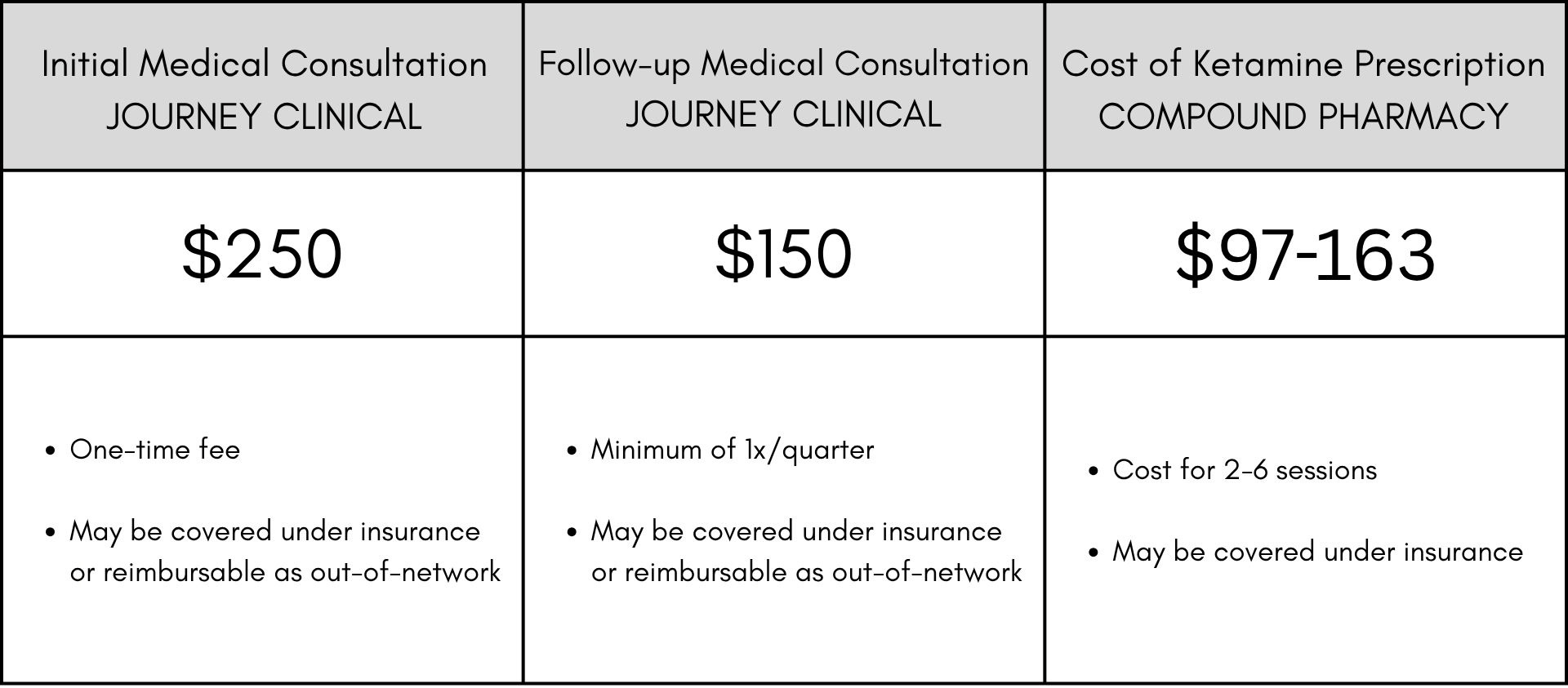
Below are the outside fees you may pay to Journey Clinical for the medical services for KAP.
Accepted Payment Methods
All major credit and debit cards are accepted, including FSA and HSA cards.

Insurance Information
Payment for psychotherapy sessions is the client’s responsibility. Therapist will submit claims to insurance, if applicable. If insurance is out-of-network, a detailed superbill can be provided upon request, which may be submitted to your insurance company for potential out-of-network reimbursement, depending on your specific plan.

Journey Clinical’s medical consultations and follow-up appointments may qualify for insurance coverage, or they can provide documentation needed for out-of-network claim submission. To better understand your benefits, contact the member services number on the back of your insurance card and inquire about coverage for outpatient mental health services and medical consultations.

Frequently Asked Questions About

Ketamine-Assisted Psychotherapy

What is Ketamine and how does it work?

Ketamine is a legal, well-researched medication that has been used safely in medical settings for decades and is now widely utilized in mental health treatment for conditions such as depression, anxiety, PTSD, and other trauma-related disorders. One of its most notable features is its rapid-acting antidepressant effect, with many individuals experiencing shifts in mood within 1–2 hours after administration. Unlike traditional antidepressants that primarily target serotonin, ketamine works on the brain’s glutamate system by blocking NMDA receptors and stimulating AMPA receptors. This process is believed to promote the growth of new neural connections and strengthen brain circuits involved in regulating mood, stress, and emotional processing. Research also suggests that ketamine enhances overall neuroplasticity, supporting the brain’s capacity to reorganize and heal in ways that can lead to sustained symptom relief.

Ketamine can be administered through several routes, including IV infusion, intramuscular injection, nasal spray, and sublingual lozenges. In collaboration with Journey Clinical, treatment is provided using sublingual lozenges, which offer a safe, controlled, and accessible option within a structured therapeutic setting.

How does Ketamine feel?

The effects of ketamine, which many clients find pleasant, typically last around 45 minutes. During this time, you may feel a sense of being “removed” from your body, along with shifts in perception that can feel expansive and insightful. Motor skills and verbal abilities may be temporarily reduced, so you will remain in a comfortable, reclining position throughout the experience.

After the effects begin to subside, the remainder of the session is dedicated to processing and discussing the experience. Even if it feels challenging to put the experience into words, many clients report that the insights gained are clear and meaningful. Research indicates that ketamine’s benefits for mood and neural growth can last up to two weeks following a session.

Who might be a good fit for Ketamine?

Research indicates that ketamine shows significant potential for treating a variety of mental health conditions, including depression, anxiety, obsessive-compulsive disorder, post-traumatic stress disorder, trauma-related disorders, and substance use disorders. It is increasingly being used for chronic, treatment-resistant conditions, particularly when traditional therapies have been insufficient.

Although research is still evolving, studies suggest that ketamine may promote the growth of new neural connections that have been weakened by chronic stress, often providing meaningful symptom relief. For example, some studies report a response rate of approximately 70% among individuals with treatment-resistant depression, with remission rates ranging from 40–50%.

Ketamine-Assisted Psychotherapy is not suitable for everyone. Individuals who may not be a good fit include those with:

Certain medical conditions: uncontrolled high blood pressure, severe cardiovascular disease, or significant liver or kidney problems.

History of psychosis or schizophrenia: ketamine can exacerbate symptoms in people with a history of psychotic disorders.

Pregnancy or breastfeeding: the safety of ketamine in these circumstances is not well established.

Active substance use disorder: if misuse of ketamine or other substances is ongoing, KAP may not be safe.

Unstable psychiatric conditions: severe agitation, suicidality, or self-harming behaviors that are not currently stabilized may require more intensive care first.

Certain medications or interactions: some drugs can interact with ketamine, so a full medical review is necessary.

Screening with a qualified medical team, such as Journey Clinical, helps ensure that KAP is safe, appropriate, and tailored to the individual’s needs.

Why is Therapy important with Ketamine?

Integrating ketamine within a therapeutic relationship can help individuals access and work through challenging experiences and patterns, often providing insights and healing that may not be attainable through traditional therapy alone. Ketamine-assisted psychotherapy can open awareness to the underlying causes of struggles that were previously out of reach.

While some providers offer ketamine without concurrent therapeutic support—both in clinics and via telehealth—research and experience show that “set and setting” are essential for meaningful, lasting change. A safe and supportive therapeutic environment enhances the potential for transformation, particularly when relational dynamics are part of the presenting concerns. This approach honors the importance of engaging the whole self—mind, heart, and spirit—to facilitate deep, sustainable healing.

How many sessions are normal and how frequent?

As a general guideline, treatment often begins with six experiential dosing sessions, though the overall length of KAP is tailored to your individual goals and desired outcomes. The number and frequency of sessions are customized to your needs, with insights gained from each experience guiding the next steps in the process.

KAP experiential dosing sessions are typically scheduled every two weeks, though the frequency can be adjusted—weekly, biweekly, or monthly—based on a personalized treatment plan. Because much of the therapeutic work occurs after the dosing experience, allowing time for integration is an essential component of the KAP process.

Are there potential risks?

Yes, Ketamine-Assisted Psychotherapy (KAP) can involve both psychological and physical risks.

In a controlled therapeutic setting, ketamine can produce a range of psychological effects, some of which may feel intense or challenging. This can include heightened emotions, dissociation, altered perceptions, or hallucinations. These experiences can sometimes bring up difficult memories or amplify underlying conditions, similar to other forms of deep therapeutic work. Physical side effects are generally short-lived and may include nausea, increased heart rate, or temporary disorientation.

While ketamine has a lower risk of dependency compared with many other substances, there is still a potential for psychological dependence, particularly if used outside of a structured therapeutic context. Its rapid-acting antidepressant effects may lead some individuals to seek repeated doses on their own. To reduce these risks and support safety, adherence to treatment guidelines and structured oversight is required throughout the KAP process.

Is KAP covered by my insurance?

Clients are responsible for psychotherapy session fees. This provider will submit claims to your insurance company, if applicable. A detailed superbill can be provided, which may be submitted to your insurance company for potential out-of-network reimbursement. This includes the initial intake assessment, preparation and integration sessions, and, in some cases, a portion of the longer experiential dosing sessions. Any costs not covered by your insurance are the responsibility of the client. Major credit cards, FSA, and HSA are accepted. Extended dosing sessions are billed using multiple units of a session code, and reimbursement for these sessions is determined by your insurance provider.

Journey Clinical can provide the necessary documentation for medical intake and follow-up consultations to support out-of-network claims. Please note that the cost of the ketamine medication itself is not covered or reimbursable by insurance. To verify coverage and determine whether any portion of your sessions or consultations may be reimbursable, contact the member services number on your insurance card.

What is your training with KAP and trauma models?

Training in Ketamine-Assisted Psychotherapy (KAP) has been completed through Journey Clinical. I am also certified in EMDR, Heart-Centered Hypnotherapy, Mindfulness-Based Stress Reduction, and trained in Shamanic practices. Ongoing professional development is a core part of practice, including regular consultation with experienced providers, participation in conferences and seminars, and continuing education to deepen expertise in psychedelic-assisted psychotherapy.

Do you prescribe medications?

No, offering prescriptions, adminstering or providing clients with any type of medication or psychedelic substances is outside of the scope of my practice.

What is Journey Clinical?

Journey Clinical is a professional platform that enables licensed psychotherapists to safely and effectively integrate evidence-based psychedelic therapies into their practice, beginning with Ketamine-Assisted Psychotherapy (KAP). Within this model, Journey Clinical’s in-house medical team manages the medical aspects of care, including assessing patient eligibility, prescribing ketamine, and monitoring treatment outcomes.

This collaborative approach allows the therapist to focus fully on the psychotherapy component, providing skilled support, preparation, dosing guidance, and integration sessions. By combining medical oversight with individualized therapy, the model creates personalized treatment plans tailored to each client’s unique needs, supporting both immediate breakthroughs and sustainable, long-term healing.

Contact info

165 W. Center Suite 208, Marion Ohio 43302

(740) 206-8610

Important links

© 2026 InPowering Pathways - All Rights Reserved.